What Are Airport City Projects?
Airport city projects, sometimes called aerotropolises, are large-scale developments that integrate airports with commercial zones, residential areas, hotels, shopping complexes, office spaces, and entertainment facilities. The idea is to transform airports from just transit points into vibrant urban hubs that contribute significantly to the local economy and lifestyle.
Why Is Adani Airport Investing Rs 20,000 Crore?
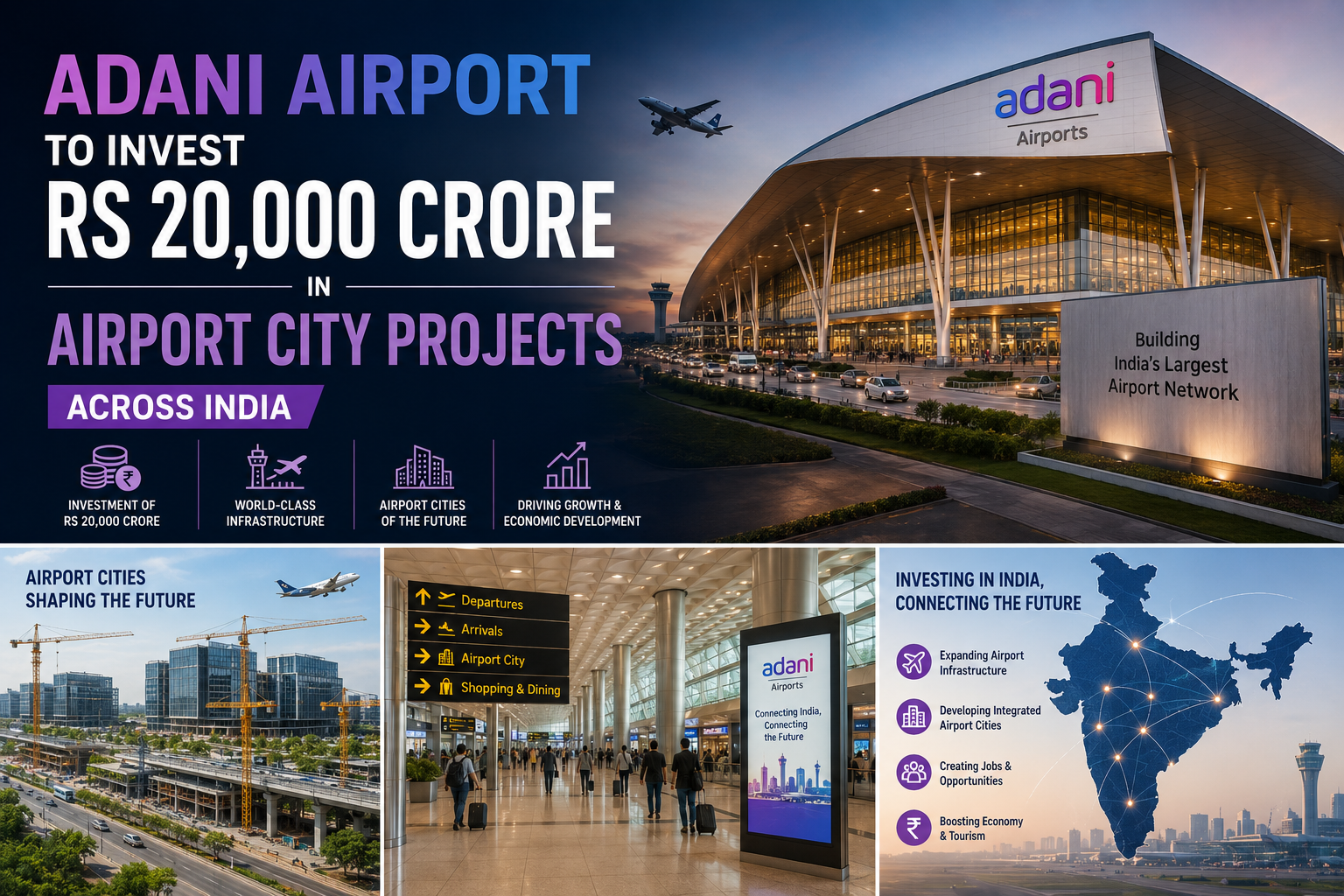
Adani Airport, part of the Adani Group’s infrastructure portfolio, has announced plans to invest Rs 20,000 crore to develop airport city projects at several locations across India. This investment reflects a broader trend in India where airports are being seen as catalysts for regional growth beyond their traditional role.
The investment aims to:
- Enhance airport infrastructure and passenger amenities.
- Create commercial and residential spaces to attract businesses and residents.
- Generate employment opportunities in and around airport zones.
- Boost tourism and trade by improving connectivity.
How Do Airport Cities Benefit Travellers and Local Communities?
For travellers, airport cities can offer improved facilities such as better shopping, dining, and accommodation options directly connected to airports. This can make layovers and travel more comfortable and convenient.
Local communities may benefit through:
- Job creation in construction, retail, hospitality, and other sectors.
- Improved infrastructure like roads, public transport, and utilities.
- Increased business opportunities due to proximity to major transport hubs.
Examples of Airport City Developments in India
India has seen several airport city initiatives, such as:
- Hyderabad Airport City: A mixed-use development with IT parks, hotels, and retail spaces near Rajiv Gandhi International Airport.
- Delhi Aerocity: A hospitality and commercial hub close to Indira Gandhi International Airport.
- Bangalore Airport City: Planned expansions around Kempegowda International Airport focusing on IT and business parks.
Adani’s investment could accelerate similar projects in other cities, potentially transforming how airports function within India’s urban landscape.
What Should Readers Keep in Mind?
While Rs 20,000 crore is a substantial investment, airport city projects are complex and take years to fully develop. Timelines may change due to regulatory approvals, market conditions, and other factors.
Readers interested in these developments can:
- Follow updates from Adani Airport and local authorities about specific projects.
- Observe how these projects impact travel convenience and local economies over time.
- Consider the potential for increased employment and business opportunities in airport regions.
Conclusion
The Rs 20,000 crore investment by Adani Airport in airport city projects signals a growing recognition of airports as more than transit points—they are becoming integrated urban hubs. These projects have the potential to improve passenger experiences and stimulate regional economic growth. However, as with any large infrastructure initiative, the benefits will unfold over several years, and ongoing developments should be watched carefully for their real-world impact.
"Airport cities represent the future of integrated urban and transport planning, blending convenience with economic opportunity."