Introduction
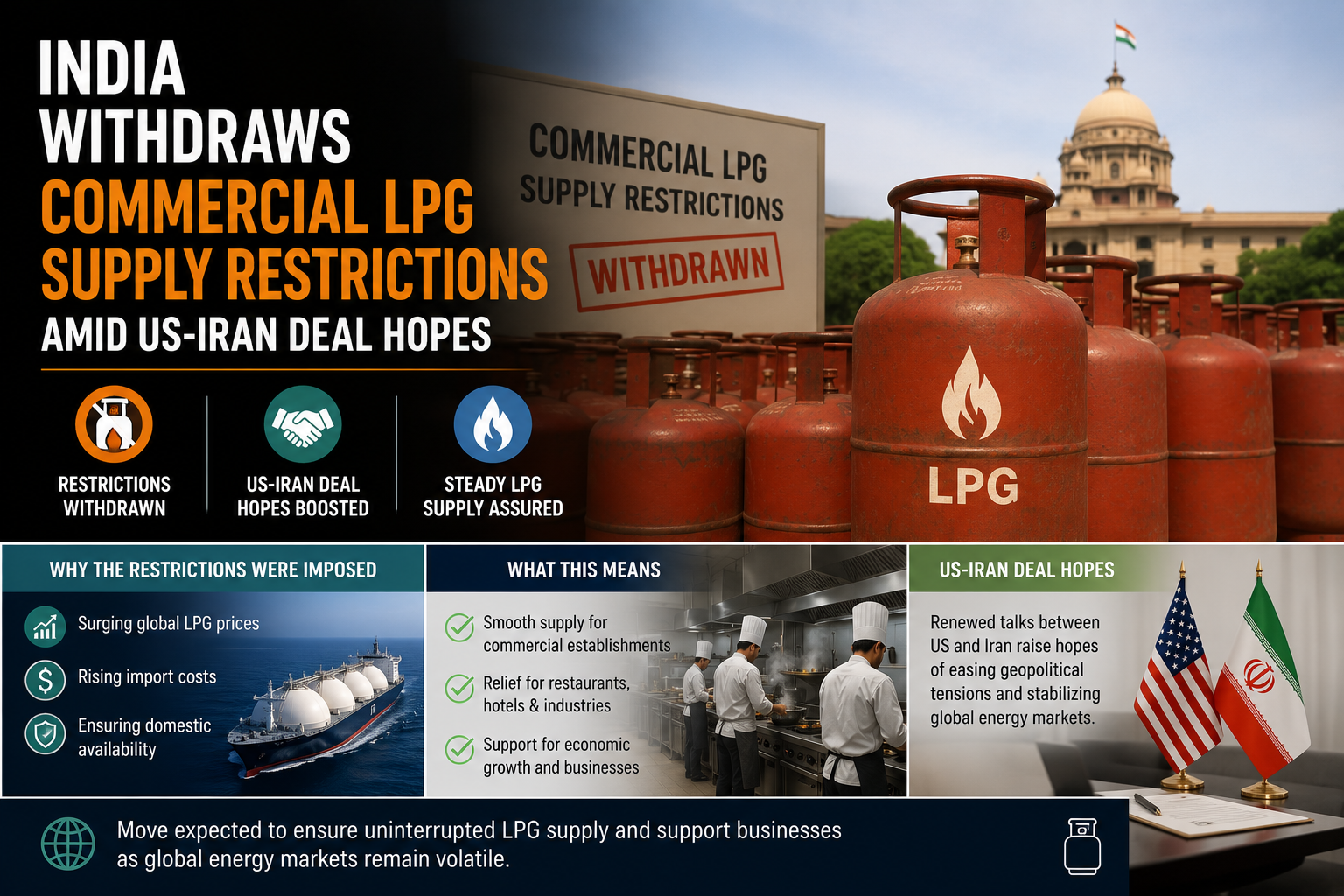
In a significant move, India has recently withdrawn restrictions on commercial Liquefied Petroleum Gas (LPG) supplies. This decision comes amid hopeful developments in the ongoing US-Iran nuclear deal talks. While the situation remains fluid, this policy change reflects India’s adaptive approach to managing its energy resources amid global geopolitical shifts.
What Were the LPG Supply Restrictions?
Earlier, India had imposed certain restrictions on commercial LPG supply. These measures aimed to prioritise household LPG consumers by limiting the availability of subsidised LPG cylinders for commercial use. The restrictions helped ensure that domestic consumers, especially those relying on LPG for cooking, had steady access during times of supply pressure or price volatility.
Why Were These Restrictions Imposed?
- Supply Constraints: Global disruptions in energy markets, including sanctions on oil-producing countries, affected LPG imports.
- Price Stability: To prevent commercial users from depleting subsidised LPG meant for households, restrictions helped balance demand.
- Protecting Consumers: Ensuring that lower-income households continued to receive LPG at affordable rates was a priority.
What Has Changed?
India’s decision to withdraw these restrictions signals a potential easing of supply pressures. This change is closely linked to optimistic signals from the US and Iran regarding the revival of the nuclear deal, which could lead to the lifting of sanctions on Iran. Iran is a significant player in global energy markets, and any easing of sanctions could improve the availability of petroleum products, including LPG, in India.
How Does the US-Iran Deal Affect India’s LPG Supply?
- Improved Imports: Iran has been a source of crude oil and LPG for India. Sanctions limited these imports, causing supply challenges.
- Price Impact: Sanctions often lead to higher prices globally. A deal could stabilise or reduce prices.
- Energy Security: Diversifying supply sources strengthens India’s energy security and reduces dependency on more volatile markets.
What Does This Mean for Consumers and Businesses?
For ordinary consumers, the withdrawal of restrictions could mean better availability of LPG for commercial purposes like restaurants, hotels, and small industries. It may also indirectly affect household LPG prices and supply conditions.
Consumers Can Expect:
- More Stable Supply: Commercial users will have easier access to LPG, reducing pressure on household supplies.
- Potential Price Stability: If global supplies improve, price volatility may decrease, benefiting consumers.
- Monitoring Market Changes: Consumers should stay informed about LPG price revisions and supply updates from suppliers.
Businesses Using LPG Should:
- Check Supply Channels: Confirm with LPG distributors about availability and any changes in supply norms.
- Plan Usage: Anticipate possible shifts in pricing or availability and adjust procurement accordingly.
- Stay Updated: Follow official announcements related to energy policy and international developments.
What Should Readers Keep in Mind?
While the withdrawal of restrictions is a positive sign, the broader geopolitical situation remains uncertain. The US-Iran nuclear deal talks have seen ups and downs in the past, and there is no guarantee that a final agreement will be reached soon. Therefore, supply conditions and prices could still fluctuate.
Consumers and businesses should:
- Monitor official government and supplier communications.
- Be prepared for possible changes in LPG availability or pricing.
- Understand that energy markets are influenced by multiple factors, including global diplomacy, production levels, and demand patterns.
Conclusion
India’s move to lift commercial LPG supply restrictions reflects a hopeful outlook on improving energy supply conditions amid evolving international relations. While this step may ease pressures on commercial LPG users and potentially stabilise the market, uncertainties remain due to the complex nature of global diplomacy and energy markets.
As a consumer or business, staying informed and flexible in response to these changes will help navigate any future shifts in LPG availability and pricing.
"Energy security is not just about supply but also about adapting to a changing global landscape." – Editorial Perspective