Introduction
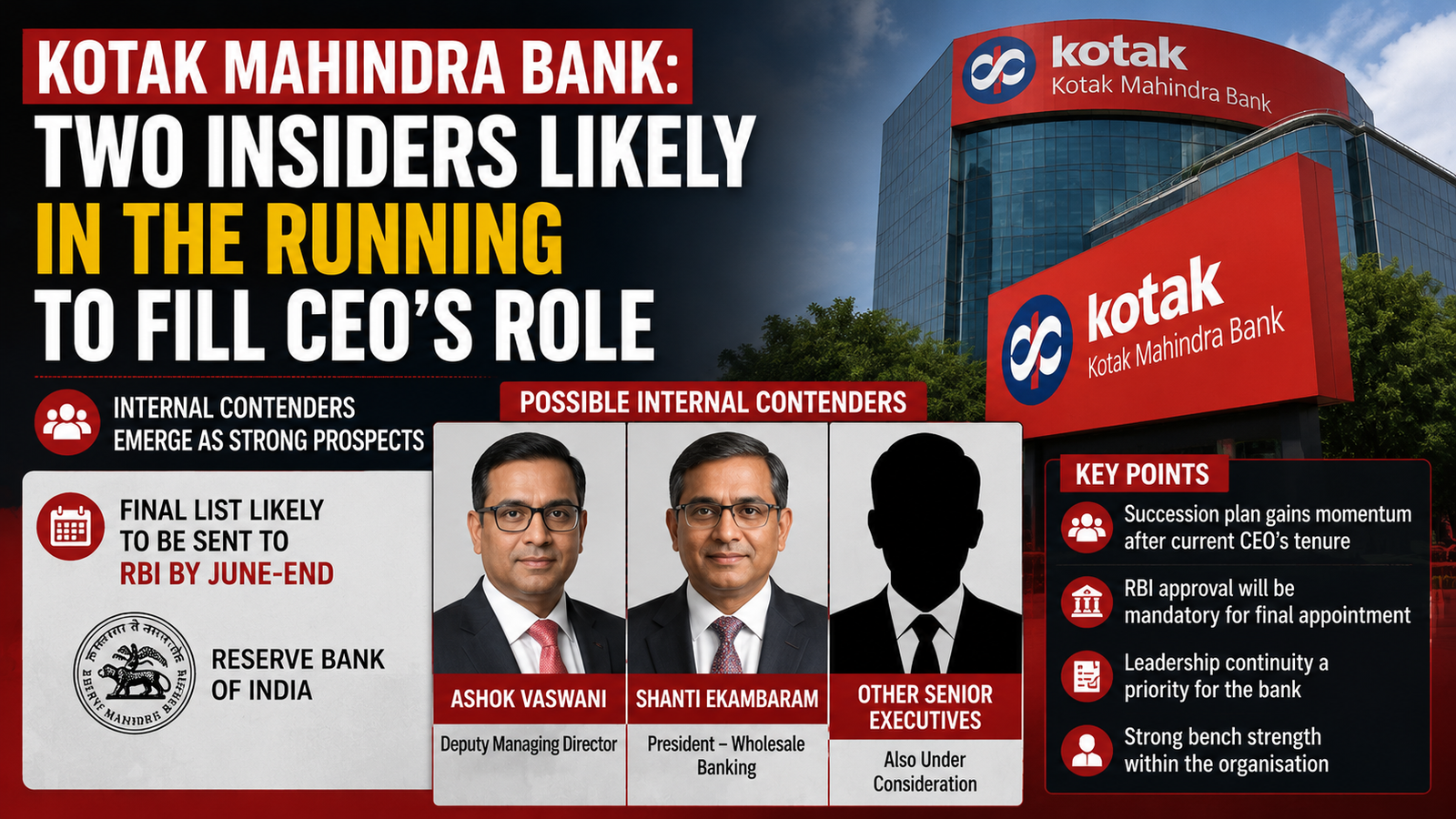
Kotak Mahindra Bank, one of India’s leading private sector banks, is reportedly in the process of selecting a new Chief Executive Officer (CEO). Two senior insiders are believed to be in the running to fill this important leadership role. While such transitions are common in large banks, they attract attention because the CEO plays a crucial role in shaping the bank’s strategy, customer service, and regulatory compliance.
Understanding the CEO Role in a Bank
The CEO of a bank is responsible for the overall management and strategic direction of the institution. This includes overseeing day-to-day operations, ensuring compliance with banking regulations, driving growth, and managing risks. For a bank like Kotak Mahindra, which operates in a competitive and highly regulated environment, the CEO’s leadership is critical to maintaining trust among customers, investors, and regulators.
Why Internal Candidates Are Often Preferred
When it comes to appointing a new CEO, many banks prefer internal candidates for several reasons:
- Institutional Knowledge: Insiders understand the bank’s culture, policies, and challenges.
- Continuity: Promoting from within ensures smoother transitions and less disruption.
- Proven Track Record: Internal candidates often have a history of performance within the bank.
However, banks also weigh these factors against the need for fresh perspectives and innovation.
How CEO Succession Works at Indian Banks
In India, the appointment of a bank’s CEO is subject to regulatory oversight, primarily by the Reserve Bank of India (RBI). The RBI plays a key role in ensuring that the person appointed is fit and proper to lead a financial institution.
The Role of the RBI
- Approval Process: Banks submit a list of potential candidates to the RBI for vetting and approval.
- Fit and Proper Criteria: The RBI assesses candidates based on their experience, integrity, financial soundness, and ability to manage risks.
- Timelines: The RBI’s approval process can take several weeks to months, depending on the complexity of the case.
Corporate Governance and Board’s Role
Besides regulatory approval, the bank’s board of directors plays a critical role in selecting and recommending candidates. They evaluate leadership qualities, strategic vision, and alignment with the bank’s long-term goals.
What This Means for Kotak Mahindra Bank Customers and Stakeholders
While leadership changes can raise questions, it’s important for customers and stakeholders to note that banks have systems in place to ensure stability and continuity. Here are some points to keep in mind:
- Operational Stability: Daily banking services typically continue without interruption during leadership changes.
- Regulatory Oversight: The RBI’s involvement adds a layer of assurance regarding the suitability of the new CEO.
- Communication: The bank is expected to communicate any official announcements through press releases or regulatory filings.
What Readers Can Do
If you are a customer or investor in Kotak Mahindra Bank, here are some practical steps you can take:
- Stay Informed: Follow official updates from Kotak Mahindra Bank and the RBI.
- Review Bank Communications: Read quarterly reports and announcements for insights on leadership and strategy.
- Understand the Process: Recognize that CEO transitions are part of normal corporate governance and usually do not affect your banking relationship.
- Ask Questions: If you have concerns, reach out to the bank’s customer service for clarification.
Conclusion
The potential appointment of a new CEO at Kotak Mahindra Bank highlights the importance of strong leadership and regulatory compliance in India’s banking sector. While two internal candidates are reportedly being considered, the final decision rests with the bank’s board and the Reserve Bank of India’s approval. Customers and stakeholders should watch for official announcements and continue to engage with the bank confidently.
"Leadership transitions, when managed well, can strengthen a bank’s future and reinforce trust among its customers and investors."