What is the Strait of Hormuz and Why Does it Matter?
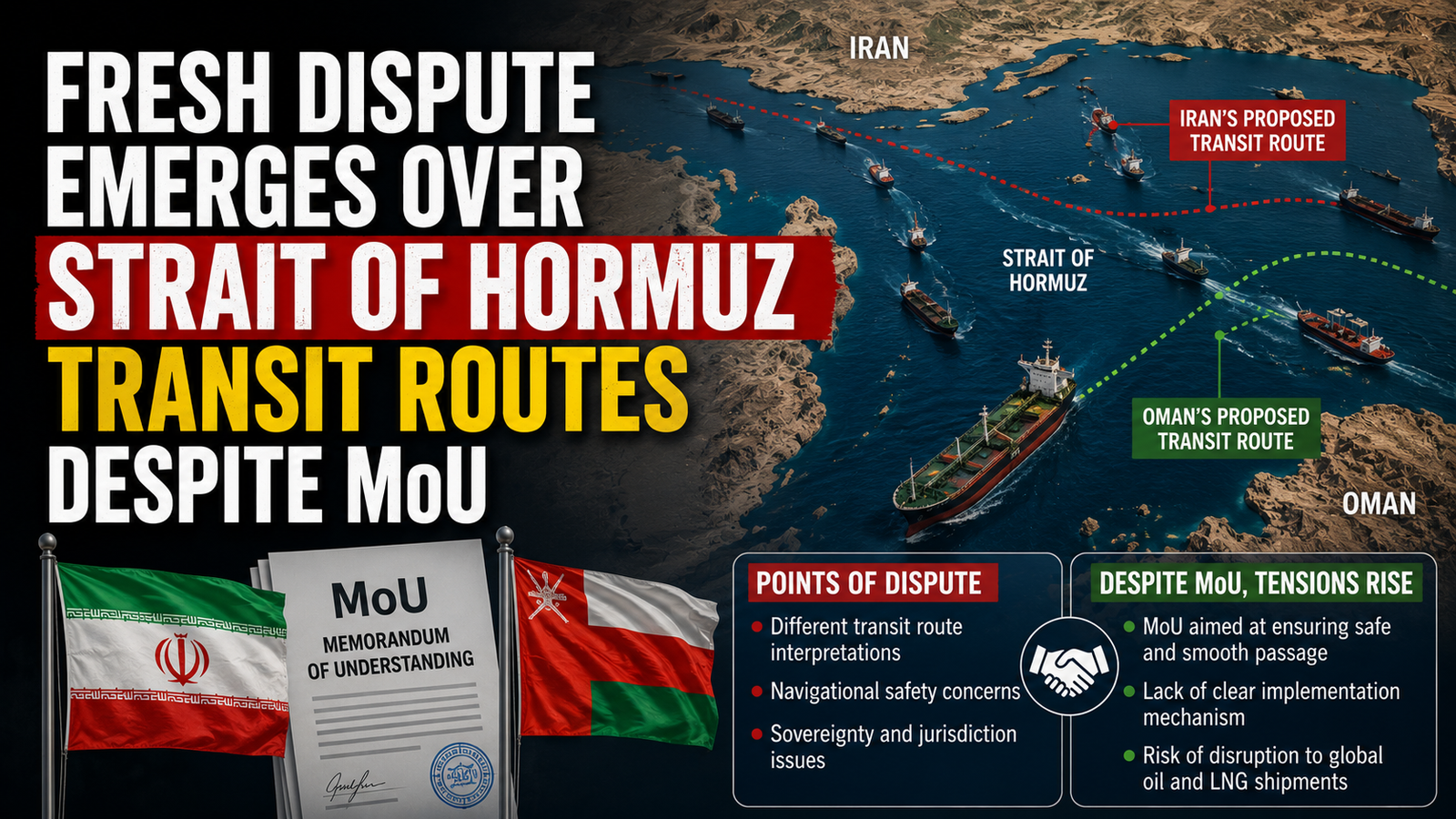
The Strait of Hormuz is a narrow waterway situated between Oman and Iran, linking the Persian Gulf with the Gulf of Oman and the Arabian Sea. It is one of the world’s most strategically important maritime chokepoints because a significant portion of the world’s oil supply passes through it every day. For many countries, especially in Asia and Europe, the Strait is a crucial transit route for energy imports.
The Importance of Transit Routes Through the Strait
Ships carrying crude oil, liquefied natural gas (LNG), and other goods rely on safe passage through the Strait. Any disruption here can lead to global energy price spikes and affect international trade. Because the Strait is only about 39 kilometres wide at its narrowest point, managing maritime traffic safely is a complex task. Countries bordering the Strait, primarily Iran and Oman, have a significant influence over how these routes are regulated and secured.
The Recent Memorandum of Understanding (MoU)
In an effort to reduce tensions and ensure safe navigation, regional countries and international stakeholders have occasionally signed agreements or Memoranda of Understanding (MoUs) related to transit routes and maritime security. These agreements aim to establish clear rules for ships passing through the Strait, promote cooperation among naval forces, and prevent incidents that could escalate into conflict.
What the MoU Intended to Achieve
- Clarify transit procedures for commercial and military vessels.
- Enhance communication and coordination among littoral states.
- Reduce misunderstandings and accidental confrontations.
- Promote regional stability and protect global energy supplies.
Why Disputes Have Re-emerged Despite the MoU
Despite the intentions behind the MoU, fresh disputes have surfaced over the exact transit routes and control mechanisms in the Strait of Hormuz. Several factors contribute to these ongoing tensions:
1. Differing Interpretations of Transit Rights
Countries may interpret the terms of passage and sovereignty differently. Iran, for example, insists on certain controls over navigation close to its coast, while other nations advocate for freedom of navigation under international law.
2. Strategic and Security Concerns
The Strait is located in a geopolitically sensitive region. Regional rivalries and the presence of foreign naval forces contribute to mistrust. Each side remains wary of the other's intentions, leading to disagreements over patrols, inspections, and the movement of military vessels.
3. Evolving Regional Dynamics
Changes in political alliances, sanctions, and military postures can influence how states approach the Strait’s governance. New leadership or shifts in policy may affect adherence to existing agreements.
What This Means for Ordinary Readers
While the disputes might seem distant, they have real-world implications. The Strait of Hormuz is a vital artery for energy supplies, and any instability can affect fuel prices and economic conditions globally, including in India.
How Readers Can Stay Informed and Prepared
- Follow credible news sources: Keep an eye on updates from reliable media and expert analyses to understand developments.
- Understand the complexity: Recognise that such disputes are multi-layered and may take time to resolve.
- Watch energy market trends: Be aware that disruptions in the Strait can influence fuel prices and economic indicators.
What Can Be Done to Manage These Disputes?
Resolving disputes over the Strait of Hormuz transit routes involves diplomatic engagement, confidence-building measures, and adherence to international maritime laws. Some possible steps include:
- Dialogue and negotiation: Regular talks between regional states to clarify and agree on transit rules.
- International mediation: Involvement of neutral parties or international organisations to facilitate agreements.
- Joint security arrangements: Cooperative patrols and information sharing to prevent misunderstandings.
- Legal frameworks: Aligning practices with the United Nations Convention on the Law of the Sea (UNCLOS) and other relevant treaties.
Conclusion
The Strait of Hormuz will likely remain a hotspot for geopolitical interest and occasional disputes due to its critical role in global energy and trade. While Memoranda of Understanding are important steps toward managing tensions, they are not a permanent solution. Understanding the nuances of these disputes helps readers appreciate the complexity of maritime security and the interconnectedness of global trade.
As the situation evolves, staying informed and recognising the importance of peaceful resolution can help citizens grasp the broader impacts beyond headlines.