Introduction
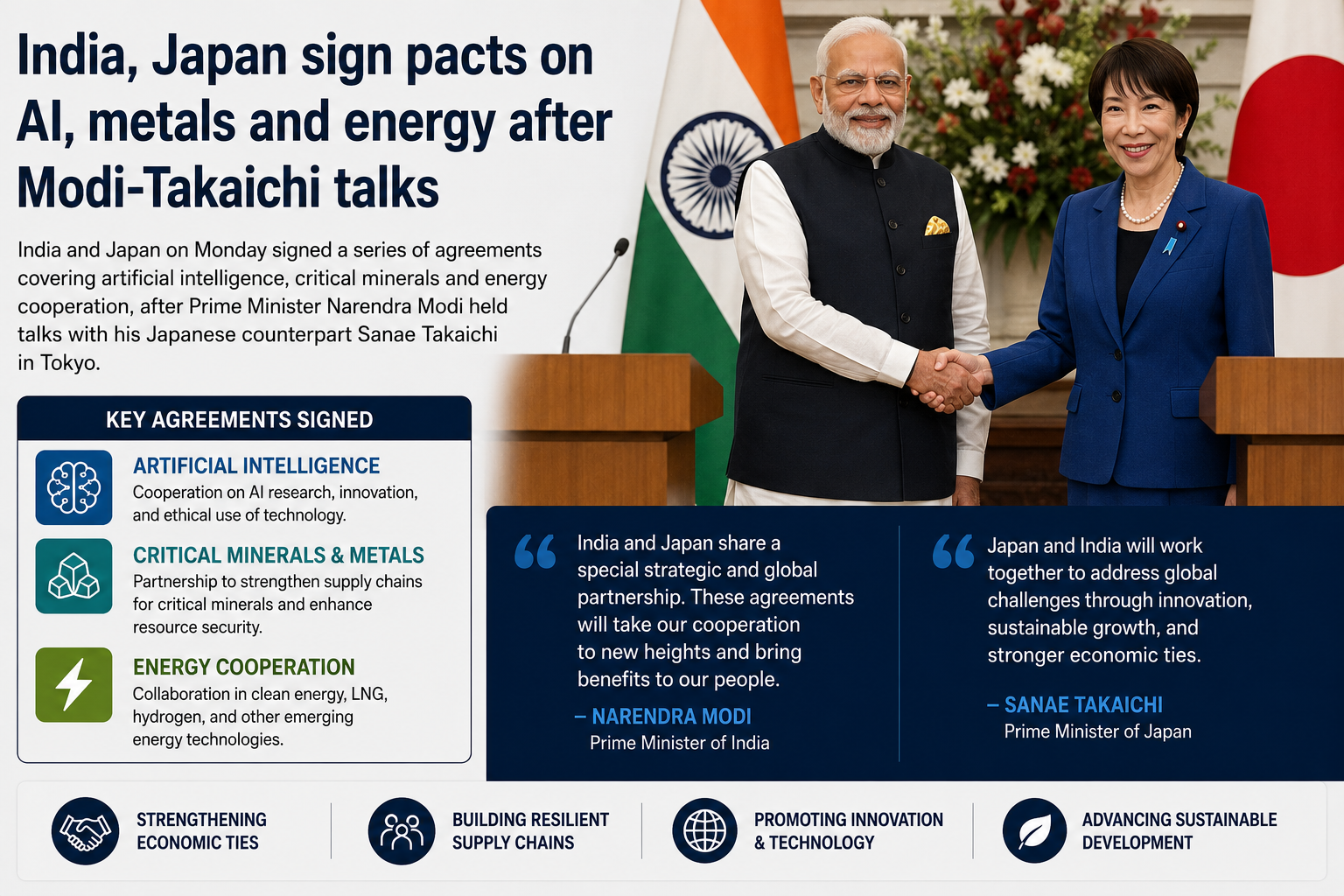
India and Japan have a longstanding relationship based on economic, technological, and strategic cooperation. Recently, the two countries signed new agreements focusing on artificial intelligence (AI), metals, and energy. These pacts were announced following high-level talks between Prime Minister Narendra Modi and Japan's Minister for Internal Affairs and Communications, Sanae Takaichi.
In this explainer, we break down what these agreements mean, why they matter, and what readers should understand about the evolving India-Japan partnership.
What Are the Key Areas of Cooperation?
1. Artificial Intelligence (AI)
AI is a rapidly growing field with applications across industries such as healthcare, agriculture, manufacturing, and finance. India and Japan's agreement on AI focuses on collaborative research, sharing expertise, and developing ethical frameworks for AI use.
This cooperation aims to leverage Japan's advanced technological capabilities and India's large talent pool in software and data sciences. Joint projects could include AI-driven smart city solutions, automation technologies, and AI for disaster prevention.
2. Metals and Minerals
Metals and minerals are critical for industrial development, especially in sectors like electronics, automotive, and infrastructure. Japan is a major consumer of metals, while India has abundant mineral resources and growing mining capabilities.
The pact encourages cooperation in the sustainable extraction, processing, and recycling of metals. It may also involve joint ventures, technology transfer, and securing supply chains for critical minerals such as rare earth elements.
3. Energy
Energy cooperation is vital for both countries as they seek to ensure reliable, affordable, and clean energy sources. India is rapidly expanding its energy infrastructure, including renewables, while Japan has expertise in energy efficiency and advanced technologies.
The agreement covers areas like renewable energy development, energy storage, grid management, and possibly nuclear energy cooperation under strict safety standards. Both countries aim to contribute to global efforts against climate change through cleaner energy solutions.
Why Are These Agreements Important?
- Strengthening Bilateral Ties: These pacts deepen the strategic and economic partnership between India and Japan, reflecting mutual trust and shared goals.
- Technological Advancement: Collaboration in AI can accelerate innovation, helping both countries stay competitive in the global technology landscape.
- Resource Security: Joint efforts in metals ensure stable access to essential materials, reducing vulnerability to supply disruptions.
- Energy Sustainability: Working together on energy projects supports sustainable development and climate goals.
What Can Readers Watch For?
While these agreements are promising, their success depends on practical implementation and ongoing cooperation. Readers may observe:
- New Projects and Initiatives: Look out for announcements about joint research centres, pilot projects, or technology exchanges.
- Industry Collaborations: Companies in AI, mining, and energy sectors may form partnerships or launch products stemming from this cooperation.
- Policy Developments: Both governments might introduce supportive policies or frameworks to facilitate collaboration.
- Impact on Jobs and Innovation: Over time, these partnerships could create new employment opportunities and spur innovation in relevant industries.
What Are Some Uncertainties?
As with any international agreement, several factors could influence outcomes:
- Geopolitical Changes: Regional or global political shifts could affect cooperation dynamics.
- Technological Challenges: AI and energy technologies evolve rapidly, and unforeseen difficulties may arise.
- Market Conditions: Fluctuations in metal prices or energy demand could impact joint initiatives.
- Regulatory Hurdles: Differences in regulations and standards might slow down implementation.
How Does This Fit into the Larger India-Japan Relationship?
India and Japan have been strengthening ties through various agreements on trade, infrastructure, defence, and technology over the past decade. This new set of pacts complements existing collaborations and highlights a shared vision of innovation-led growth and sustainable development.
Both countries also cooperate in multilateral forums and regional initiatives, aiming to promote peace, security, and economic prosperity in the Indo-Pacific region.
Conclusion
The recent India-Japan agreements on AI, metals, and energy represent a significant step in deepening cooperation between two important Asian economies. For readers, understanding these developments helps appreciate how international partnerships shape technology, resources, and energy landscapes that affect everyday life.
While the full impact will unfold over time, these pacts signal a commitment to innovation, sustainability, and shared progress. Keeping an eye on future announcements and projects can provide insights into how these collaborations benefit both nations and the wider region.
"International cooperation in emerging technologies and resource management is key to addressing global challenges and unlocking new opportunities for growth."