Introduction
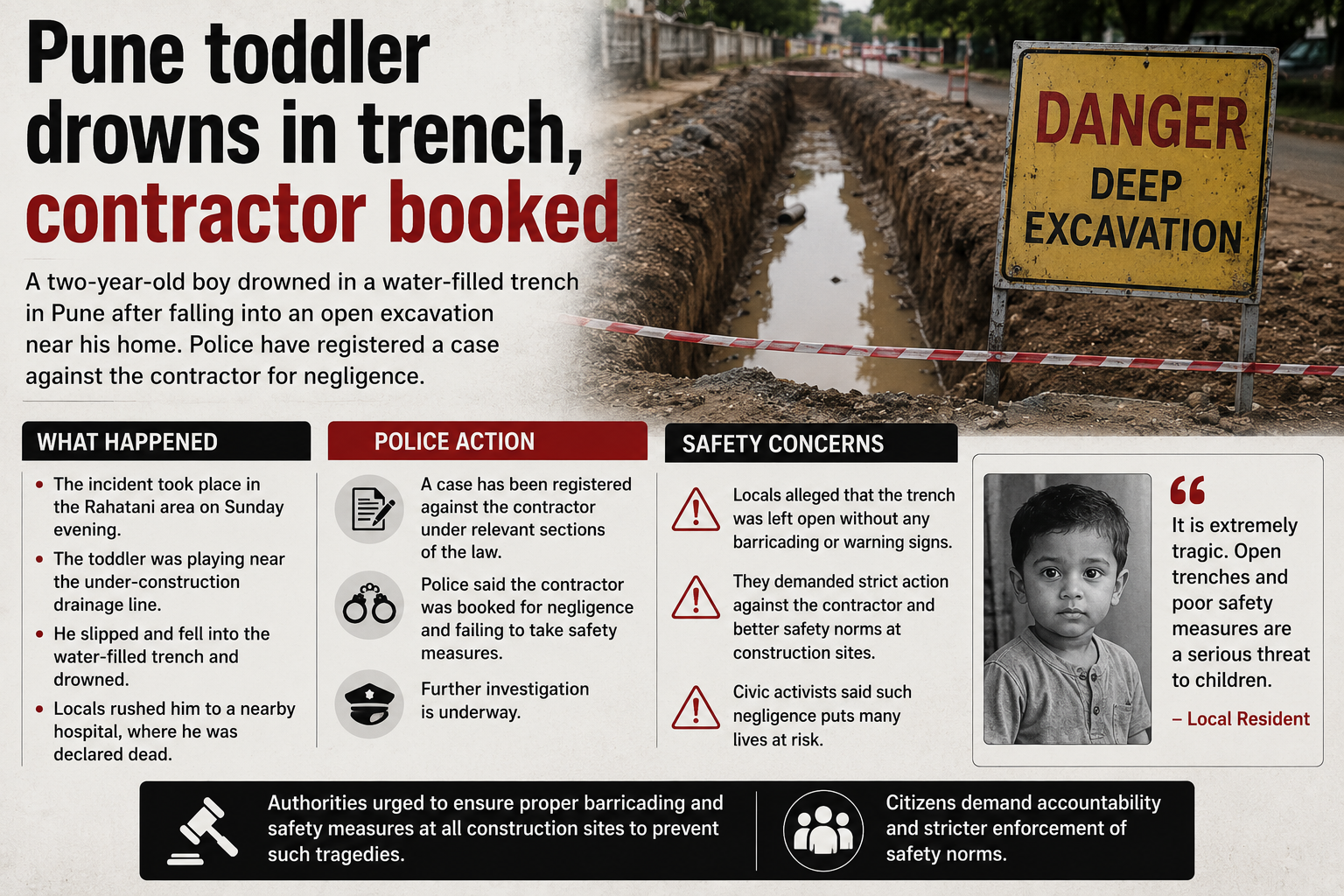
Recently, a tragic incident in Pune involving the drowning of a toddler in an open trench has brought attention to the safety risks posed by construction sites in residential and public areas. While the details of this specific case are under investigation, it raises important questions about how such accidents can be prevented and what responsibilities contractors and communities have to ensure safety.
Why Are Construction Sites Risky?
Construction sites, especially those in urban areas like Pune, often involve open pits, trenches, heavy machinery, and materials that can pose hazards. These dangers are amplified when adequate safety measures are not implemented or maintained. Children, due to their natural curiosity and limited understanding of risks, are particularly vulnerable.
Common Hazards Around Construction Areas
- Open Trenches and Pits: Deep holes or trenches can fill with water or have unstable edges, increasing the risk of drowning or falls.
- Unsecured Equipment: Tools and machinery left unattended can cause injuries.
- Poor Signage and Barriers: Lack of clear warnings and physical barriers makes it easier for children or passersby to accidentally enter dangerous zones.
- Construction Debris: Loose materials can cause trips, falls, or other injuries.
Legal Responsibilities of Contractors
In India, contractors and construction companies have a legal and ethical duty to ensure the safety of their sites. This includes:
- Installing proper fencing and barriers around hazardous areas.
- Maintaining clear and visible warning signs.
- Ensuring trenches are covered or guarded when not actively worked upon.
- Complying with local municipal safety regulations and building codes.
Failure to adhere to these responsibilities can lead to legal action, including criminal charges in cases of negligence resulting in injury or death.
What Can Families and Communities Do?
While contractors must take responsibility, families and communities can also play a vital role in preventing accidents:
- Educate Children: Teach children about the dangers of playing near construction sites or open trenches.
- Stay Vigilant: Parents and guardians should supervise young children closely, especially in areas undergoing construction.
- Report Unsafe Conditions: If you notice an unguarded trench or unsafe construction practices, inform local authorities or municipal bodies promptly.
- Community Awareness: Organise or participate in local safety awareness campaigns to highlight the importance of construction site safety.
How to Check Safety Around Construction Sites
If you live near or frequently pass by construction zones, here are some practical tips to assess safety:
- Look for Barriers: Check if trenches and pits are fenced off or covered.
- Observe Signage: Ensure there are clear warning signs displayed prominently.
- Assess Lighting: Poorly lit sites can be more dangerous, especially at dusk or night.
- Note Site Cleanliness: Excess debris or scattered tools increase risks.
- Check for Water Accumulation: Open trenches with stagnant water are particularly hazardous for children and animals.
What To Do If You Encounter Unsafe Conditions
If you find a construction site that seems unsafe, consider these steps:
- Contact Local Authorities: Reach out to the municipal corporation or local police to report the hazard.
- Inform the Contractor or Builder: If possible, notify the responsible company or contractor to take corrective action.
- Alert Community Groups: Local resident welfare associations or neighbourhood groups can help raise awareness.
- Document the Issue: Take photos or videos to provide evidence if needed for official complaints.
Understanding the Limits of Prevention
While many accidents can be prevented through vigilance and adherence to safety norms, it is important to understand that no system is foolproof. Unexpected incidents can still occur despite precautions. Hence, a combined effort involving contractors, authorities, families, and communities is essential to minimise risks.
Conclusion
The unfortunate incident involving a toddler drowning in a trench in Pune is a sobering reminder of the dangers posed by inadequately secured construction sites. It highlights the need for stronger enforcement of safety regulations, greater accountability from contractors, and increased public awareness. By understanding the risks and taking proactive steps, families and communities can better protect their children and prevent similar tragedies in the future.
"Safety is a shared responsibility. Every stakeholder must play their part to ensure our neighbourhoods are safe for the most vulnerable."