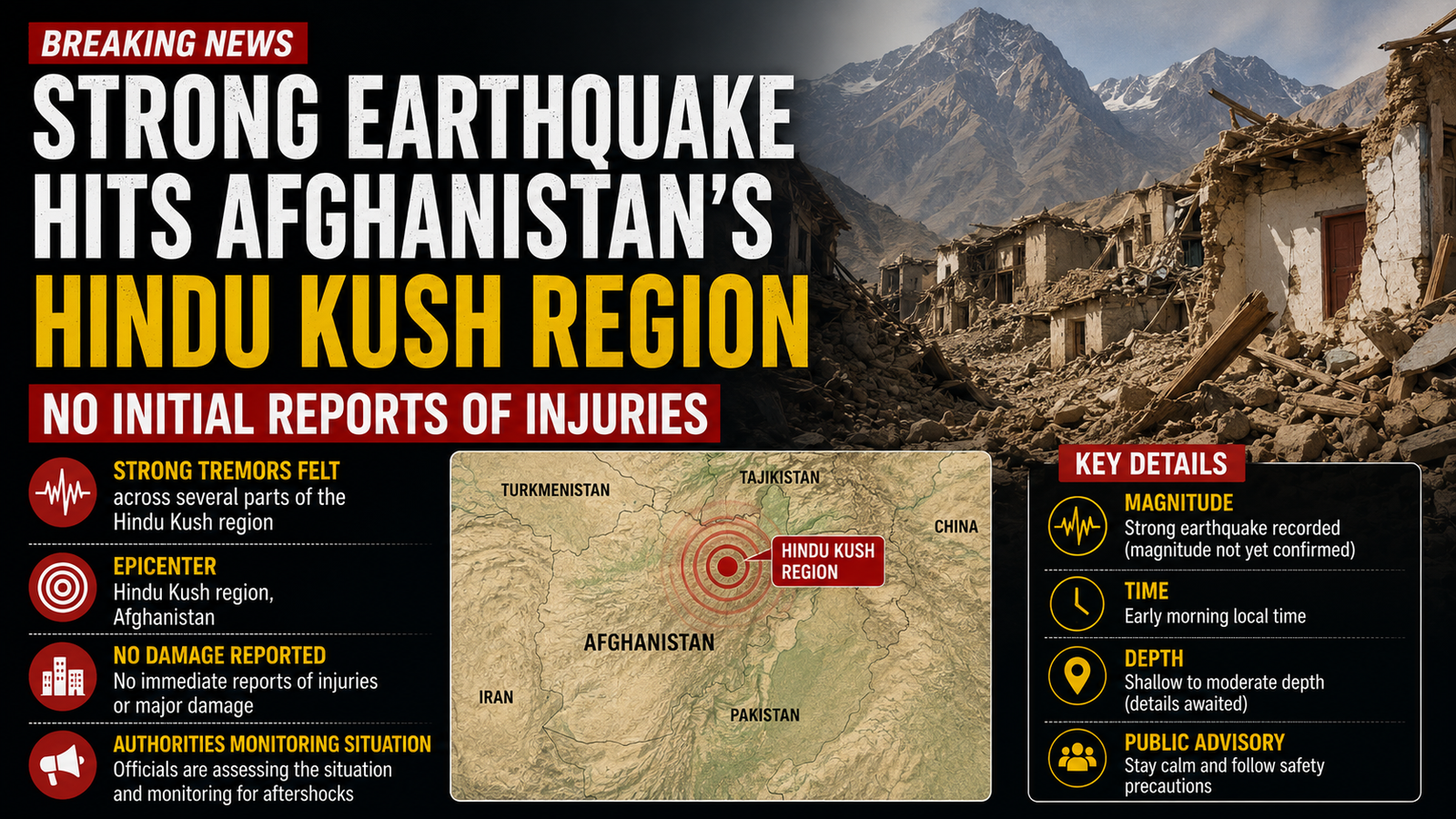
Introduction to the Recent Earthquake in the Hindu Kush Region
Recently, a strong earthquake shook Afghanistan's Hindu Kush region, an area known for its seismic activity. Fortunately, there are no initial reports of injuries or major damage. However, this event serves as an important reminder for residents and observers about the nature of earthquakes and how to respond to them effectively.
What Causes Earthquakes in the Hindu Kush Region?
The Hindu Kush mountain range lies at a complex tectonic boundary where the Indian Plate is colliding with the Eurasian Plate. This collision causes the earth's crust to deform and occasionally snap, releasing energy in the form of seismic waves — what we experience as an earthquake.
Due to this tectonic activity, the Hindu Kush region experiences frequent earthquakes, some of which can be strong enough to cause significant damage. The depth of these earthquakes can vary, influencing how much shaking is felt on the surface.
Why Are Some Earthquakes More Destructive?
- Magnitude: The amount of energy released determines the earthquake’s strength.
- Depth: Shallow earthquakes tend to cause more surface damage than deeper ones.
- Distance from Populated Areas: Earthquakes near cities or towns can have more serious consequences.
- Local Geology: Soil type and rock formations affect how seismic waves travel and amplify.
Why Are There No Initial Reports of Injuries?
In many earthquake events, especially in remote or mountainous regions like the Hindu Kush, it takes time to assess the full impact. Initial reports often come from seismic monitoring agencies or local authorities who may not have immediate access to affected areas.
Moreover, the absence of injuries in early reports does not guarantee that there were none. Communication challenges, difficult terrain, and ongoing aftershocks can delay accurate information. It is important to stay updated through reliable sources as the situation develops.
How to Stay Safe During an Earthquake
Regardless of where you live, understanding basic earthquake safety is essential. Here are some practical tips:
- Drop, Cover, and Hold On: When shaking starts, drop to the ground, take cover under sturdy furniture, and hold on until the shaking stops.
- Stay Indoors: Avoid running outside during shaking as falling debris can cause injuries.
- Identify Safe Spots: Know the safest places in your home or workplace, such as under strong tables or against interior walls away from windows.
- Prepare an Emergency Kit: Keep essentials like water, food, flashlight, and first aid handy.
- Have a Communication Plan: Establish how to contact family members and where to meet after an earthquake.
What to Do After an Earthquake
Once the shaking stops, there are several steps to follow to ensure safety and help others:
- Check for Injuries: Provide first aid if necessary and seek medical help for serious injuries.
- Inspect Your Surroundings: Look for hazards such as gas leaks, damaged electrical wires, or structural damage.
- Expect Aftershocks: These smaller tremors can follow the main quake and may cause additional damage.
- Stay Informed: Listen to official updates from authorities and avoid spreading unverified information.
- Help Neighbours: Check on vulnerable people like the elderly or disabled if it is safe to do so.
Understanding the Uncertainty After an Earthquake
Earthquakes are unpredictable in nature. Even with modern technology, it is not possible to precisely forecast when or where the next strong tremor will occur. This uncertainty means communities must remain vigilant and prepared at all times.
Seismic monitoring agencies provide valuable data, but initial assessments may change as more information becomes available. It is best to rely on official sources and avoid speculation or panic.
Conclusion: The Importance of Awareness and Preparedness
The recent earthquake in Afghanistan's Hindu Kush region highlights the ongoing seismic risks in this part of the world. While no injuries have been reported so far, the event is a reminder for everyone living in or near earthquake-prone areas to stay informed and prepared.
By understanding the causes of earthquakes, following safety protocols, and maintaining readiness, individuals and communities can reduce the dangers posed by these natural events. Remember, preparedness is not just about reacting to an earthquake but also about building resilience for the future.
"An earthquake may shake the ground beneath us, but knowledge and preparedness anchor us safely through the storm."
Stay safe, stay informed, and support one another in the face of natural challenges.