What Is the Omega Heatwave?
The term Omega heatwave refers to a specific weather pattern shaped like the Greek letter Omega (Ω) in the jet stream. This pattern causes a stable, high-pressure system to settle over a region, trapping hot air and leading to prolonged periods of extreme heat.
In Europe, this Omega-shaped ridge in the atmosphere has resulted in soaring temperatures lasting several days or even weeks. Unlike short heat spikes, the Omega heatwave creates a persistent heat dome, making it difficult for cooler air to move in and relieve the temperature stress.
Which European Countries Are Most Affected?
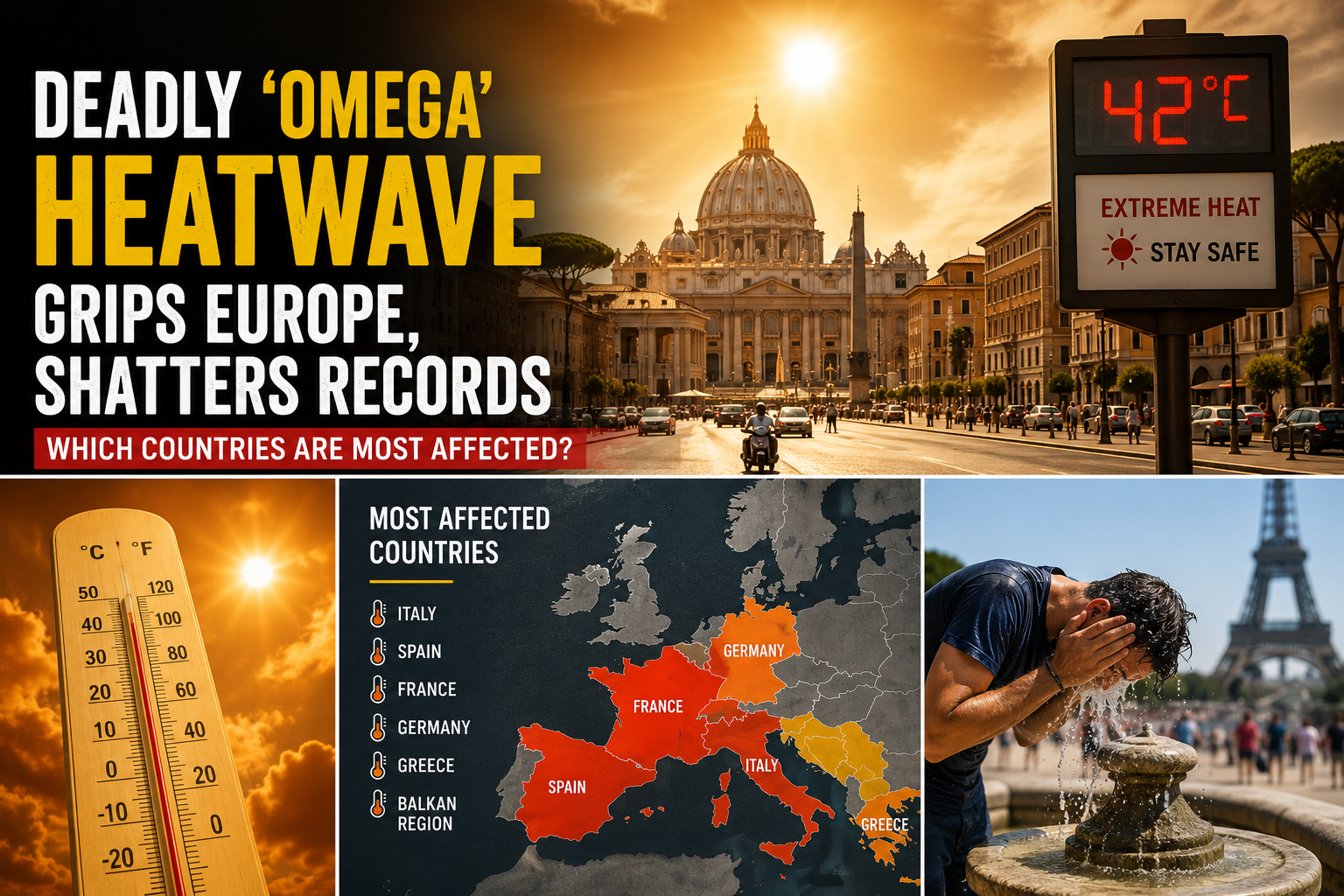
The Omega heatwave has swept across much of southern and western Europe, breaking temperature records in several countries. Some of the most affected nations include:
- Spain: Many regions, especially central and southern Spain, have experienced temperatures exceeding 40°C (104°F), with some areas recording historic highs.
- France: France has seen intense heatwaves with temperatures climbing above 38°C (100°F) in cities like Paris and Marseille.
- Italy: Northern and central Italy have been under the grip of extreme heat, impacting cities such as Rome and Milan.
- Greece: Greece faces not only high temperatures but also increased wildfire risks due to dry conditions accompanying the heatwave.
- Portugal: Portugal has also reported record-breaking temperatures, particularly in the southern Algarve region.
Other countries across Europe, including Germany, Switzerland, and parts of Eastern Europe, have also felt the heat, although the impact varies by region.
Why Is This Heatwave So Intense?
The Omega heatwave’s severity is linked to multiple factors:
- Atmospheric Pattern: The Omega-shaped jet stream pattern causes a stationary high-pressure system, effectively trapping hot air.
- Climate Change: Rising global temperatures increase the likelihood and intensity of heatwaves worldwide, including Europe.
- Dry Conditions: Reduced soil moisture and drought conditions can amplify heatwave impacts, as dry land heats up faster than moist ground.
Scientists continue to study how much climate change contributes to individual heatwave events, but the trend toward more frequent and severe heatwaves is clear.
Health and Safety Risks
Heatwaves like the Omega event pose significant health risks, especially for vulnerable populations:
- Elderly and Children: These groups are more susceptible to heat exhaustion, heatstroke, and dehydration.
- People with Chronic Illnesses: Heat can worsen conditions such as cardiovascular and respiratory diseases.
- Outdoor Workers and Athletes: Prolonged exposure to extreme heat increases risk of heat-related illnesses.
Health systems may face increased pressure during such heatwaves due to higher emergency cases.
What Can You Do to Stay Safe?
If you are in Europe or planning to travel there during a heatwave, consider the following tips:
- Stay Hydrated: Drink plenty of water throughout the day, even if you do not feel thirsty.
- Avoid Peak Heat Hours: Limit outdoor activities between 11 am and 4 pm when temperatures are highest.
- Use Cooling Methods: Take cool showers, use fans or air conditioning, and wear light, loose clothing.
- Check on Vulnerable People: Ensure elderly relatives, neighbours, and children are safe and hydrated.
- Follow Local Advisories: Stay updated with weather alerts and health advisories issued by local authorities.
What to Expect Next?
Weather patterns can change rapidly, and while the Omega heatwave is expected to persist for some time, cooler air masses may eventually break the heat dome. However, with climate change influencing the frequency of such events, Europe may see more intense heatwaves in the coming years.
It is important to remain informed through reliable weather updates and to take necessary precautions to protect health and wellbeing during extreme heat events.
“Heatwaves are becoming a new normal in Europe’s climate, underscoring the urgent need for preparedness and adaptation.”
Conclusion
The deadly Omega heatwave gripping Europe is a stark reminder of the challenges posed by extreme weather in a warming world. Countries like Spain, France, Italy, and Greece are facing unprecedented temperatures that threaten health, agriculture, and daily life. Understanding the nature of this heatwave and following practical safety measures can help individuals navigate these intense conditions more safely.
Stay informed, stay hydrated, and take care during this period of extreme heat.