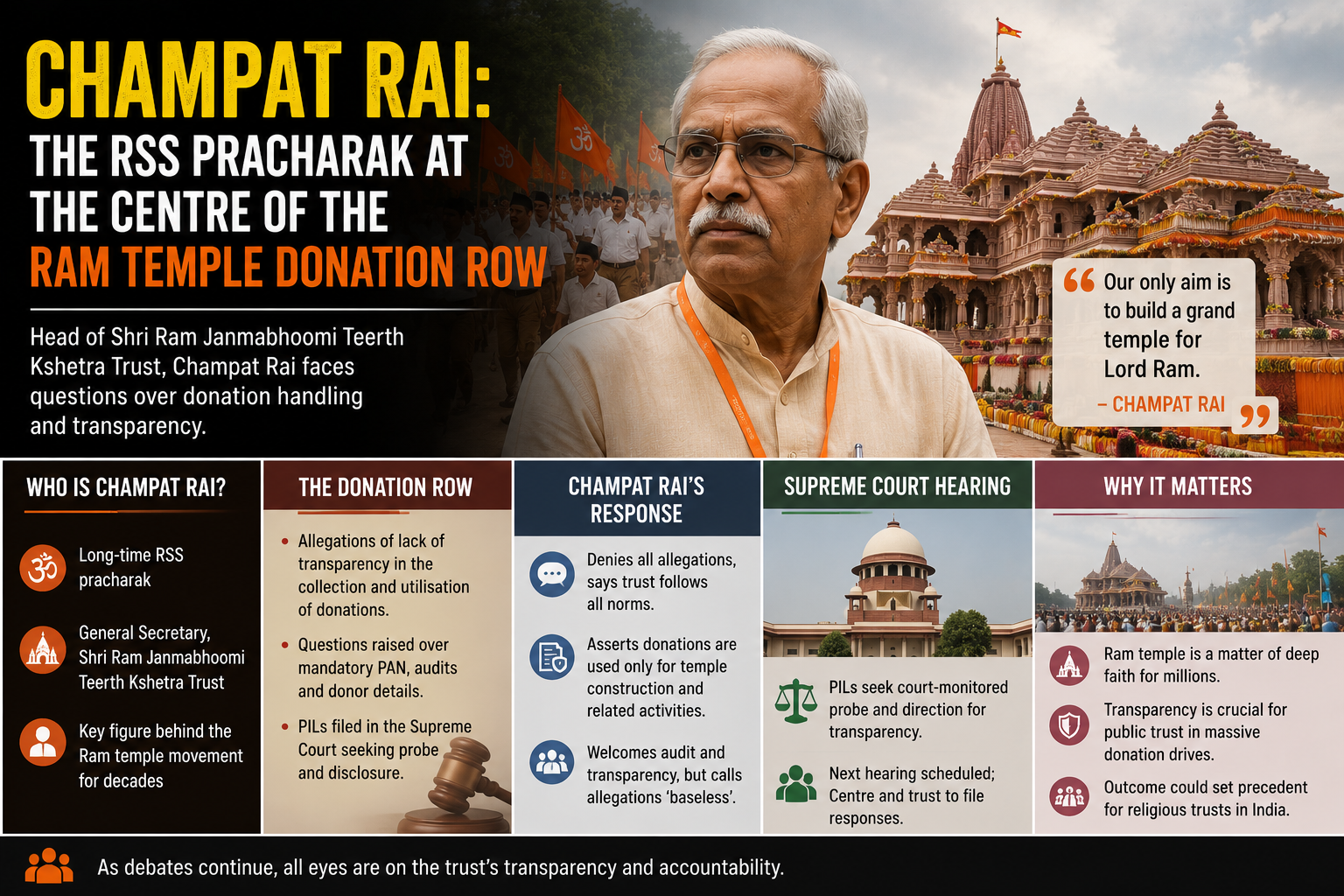
Who is Champat Rai?
Champat Rai is a well-known figure associated with the Rashtriya Swayamsevak Sangh (RSS), one of India’s largest volunteer organisations with a long history of involvement in socio-political and cultural issues. As a senior pracharak (full-time worker) of the RSS, Rai has been deeply involved in the Ram Janmabhoomi movement, which aims to build a temple dedicated to Lord Ram at his believed birthplace in Ayodhya, Uttar Pradesh.
Champat Rai’s Role in the Ram Janmabhoomi Movement
The Ram Janmabhoomi movement has been a significant and sensitive issue in Indian public life for decades. Champat Rai emerged as a prominent leader within this movement, advocating for the construction of the Ram temple. His association with the RSS, which has historically supported the temple cause, positioned him as a key organiser and spokesperson.
Over the years, Rai has been involved in various campaigns, legal battles, and public outreach efforts to mobilise support for the temple. His work helped keep the movement active and focused, especially after the Supreme Court verdict in 2019 that paved the way for the temple’s construction.
Involvement in the Ram Temple Trust
Following the Supreme Court’s decision, the Shri Ram Janmabhoomi Teerth Kshetra trust was established to oversee the construction and management of the Ram temple in Ayodhya. Champat Rai was appointed as the General Secretary of this trust, placing him at the centre of administrative and fundraising activities.
In this capacity, Rai has been responsible for coordinating the temple’s development, engaging with donors, and managing public communication related to the project. His role is crucial because the temple’s construction depends significantly on public donations and transparent management.
The Donation Row: What Happened?
Recently, Champat Rai’s name became associated with a controversy concerning the handling of donations for the Ram temple. Allegations surfaced about irregularities in the collection and utilisation of funds, sparking debates both within the trust and among the wider public.
While the details of these allegations are complex and still under scrutiny, the controversy highlights the challenges of managing large-scale religious projects that involve significant public contributions. It also underscores the importance of transparency and accountability in such initiatives.
Understanding the Controversy
- Allegations: Claims have been made regarding the mismanagement or improper accounting of donations received for the temple construction.
- Response: The trust and Champat Rai have denied any wrongdoing, emphasizing their commitment to transparency.
- Legal and Administrative Review: Authorities and internal committees are expected to investigate these claims to ensure proper governance.
It is important to note that controversies of this nature often involve complex legal and administrative processes. Until official findings are released, readers should avoid jumping to conclusions and rely on credible news sources for updates.
Why Does This Matter to the Public?
The Ram temple in Ayodhya holds immense religious and cultural significance for millions of Hindus across India and the world. The construction of the temple is seen as the culmination of a long-standing aspiration.
Given the scale of the project and the large number of devotees contributing donations, ensuring that funds are managed ethically and transparently is crucial. Any controversy surrounding donations can affect public trust and the temple’s future development.
What Can Readers Do?
- Stay Informed: Follow updates from trusted news outlets and official statements from the Shri Ram Janmabhoomi Teerth Kshetra trust.
- Verify Before Donating: If you wish to contribute to the temple fund, ensure donations are made through official channels.
- Understand the Context: Recognise that large projects often face administrative challenges and controversies, which may or may not be substantiated.
- Encourage Transparency: Support calls for clear and accountable management of public funds in religious and social projects.
Conclusion
Champat Rai’s role as an RSS pracharak and General Secretary of the Ram Janmabhoomi trust places him at the heart of one of India’s most significant religious projects. While recent donation-related controversies have raised questions, it is important to approach the issue with a balanced perspective and await verified information.
The Ram temple’s construction is a historic endeavour, and its success depends not only on devotion but also on trust and transparent management. Readers interested in the topic should keep an eye on official updates and participate responsibly if they choose to support the cause.