Introduction
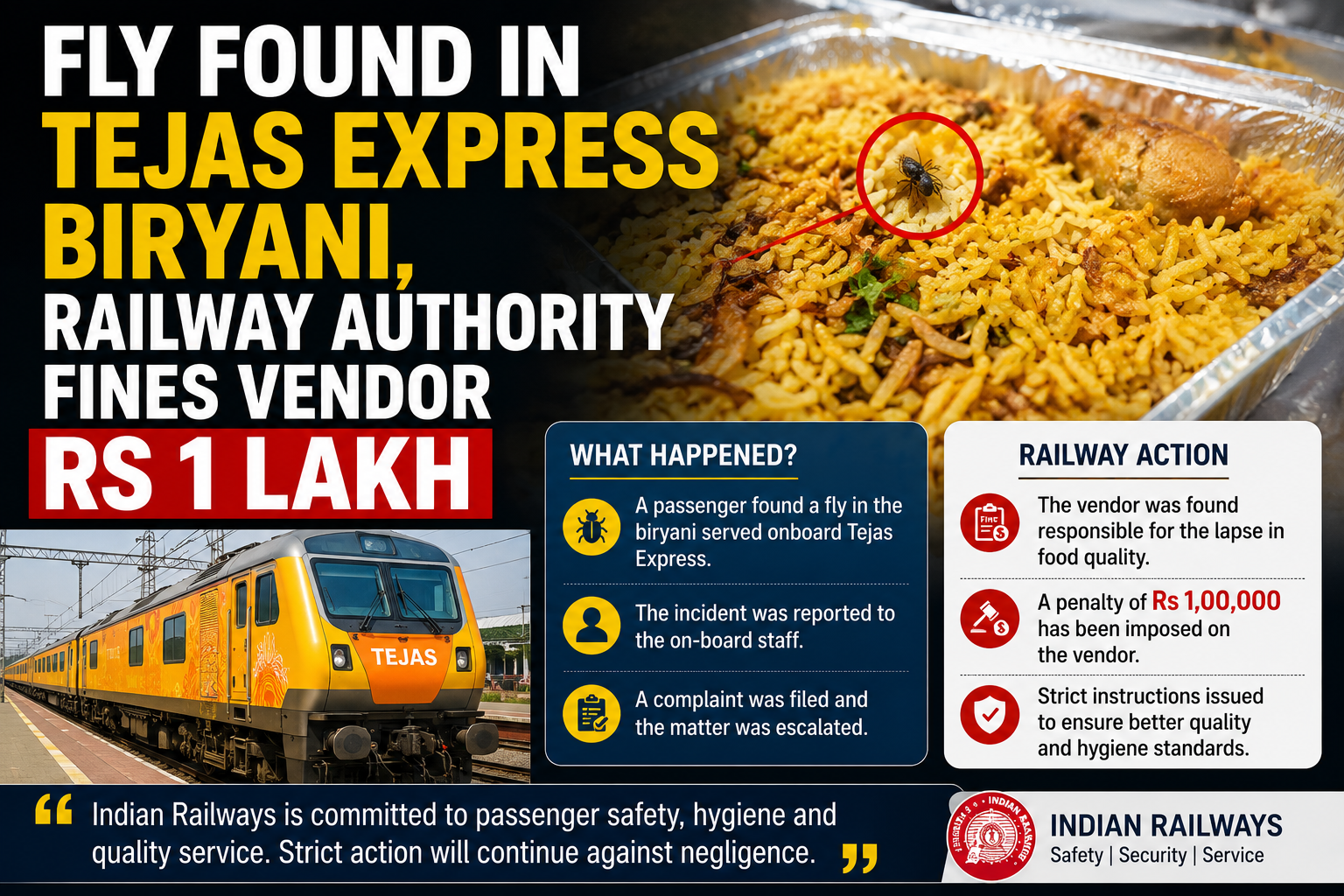
Recently, an incident caught the attention of many when a fly was found in the biryani served on the Tejas Express, one of India's premier trains. This led to the railway authority imposing a fine of Rs 1 lakh on the food vendor responsible. While such incidents are unfortunate, they highlight important issues around food safety and hygiene in train catering services. This article aims to explain what passengers should know about food quality on trains, their rights, and how the railway system addresses such concerns.
Understanding Train Catering Services
Indian Railways operates one of the largest railway networks in the world, serving millions of passengers daily. Many trains, especially premium ones like the Tejas Express, offer onboard catering services, including freshly prepared meals such as biryani, snacks, and beverages.
The catering services are usually managed by vendors licensed by the railways or by Indian Railway Catering and Tourism Corporation (IRCTC). These vendors are expected to follow strict hygiene and food safety standards to ensure passengers receive safe and quality food.
Food Safety and Hygiene Standards
Food safety is a critical aspect of public health, especially in settings like trains where food is prepared and served in limited space and time. Some key points about food safety in train catering include:
- Licensing and Inspections: Vendors must obtain licenses and are subject to regular inspections by railway authorities to ensure compliance with hygiene norms.
- Cleanliness: Kitchens, food preparation areas, and storage must be clean and free from contamination risks such as insects, rodents, and dust.
- Food Handling: Proper handling, cooking, and storage temperatures are essential to prevent foodborne illnesses.
- Packaging: Meals should be hygienically packed to avoid contamination during transit and serving.
What Happens When Food Safety Is Compromised?
Despite efforts, occasional lapses can occur, as seen in the Tejas Express incident. When passengers find issues like foreign objects in food, poor taste, or signs of contamination, it is important to take the following steps:
- Report Immediately: Inform the train staff or catering supervisor about the issue as soon as possible.
- Document the Problem: If feasible, take photos or keep the food as evidence.
- File a Complaint: Passengers can file complaints with the train authorities, IRCTC, or through official railway grievance portals.
- Seek Refund or Compensation: Depending on the situation, passengers may be eligible for a refund or compensation.
Railway Authority Actions and Vendor Accountability
When a complaint is verified, railway authorities can take strict actions against vendors, including:
- Fining the vendor, as in the recent case where the vendor was fined Rs 1 lakh.
- Suspending or canceling the vendor's license if violations are severe or repeated.
- Ordering corrective measures to improve hygiene and food safety standards.
Such actions serve as deterrents and encourage vendors to maintain high standards to protect passenger health and trust.
Passenger Rights and How to Protect Yourself
Passengers have the right to safe, hygienic food while travelling. Here are some tips to protect yourself:
- Choose Trusted Vendors: When possible, opt for meals from reputed vendors or IRCTC's e-catering services with good reviews.
- Inspect Food Packaging: Check if the meal is sealed properly and looks fresh before consumption.
- Be Alert to Signs of Spoilage: Avoid food with unusual smell, colour, or texture.
- Keep Contact Details Handy: Note down helpline numbers for railway catering complaints.
- Report Issues Promptly: Early reporting helps authorities take swift action and prevents others from facing similar problems.
Conclusion
Food safety on trains is a shared responsibility between railway authorities, vendors, and passengers. Incidents like the fly found in Tejas Express biryani remind us of the importance of vigilance and accountability. While Indian Railways continues to improve catering standards, passengers should also remain informed and proactive in safeguarding their health during travel. By understanding your rights and knowing how to raise concerns, you contribute to a safer and more enjoyable journey for everyone.
"Clean and safe food is not just a service, but a necessity that every passenger deserves on their travel."