What Is the Viral App That Can ‘Halt’ E-Rickshaws?
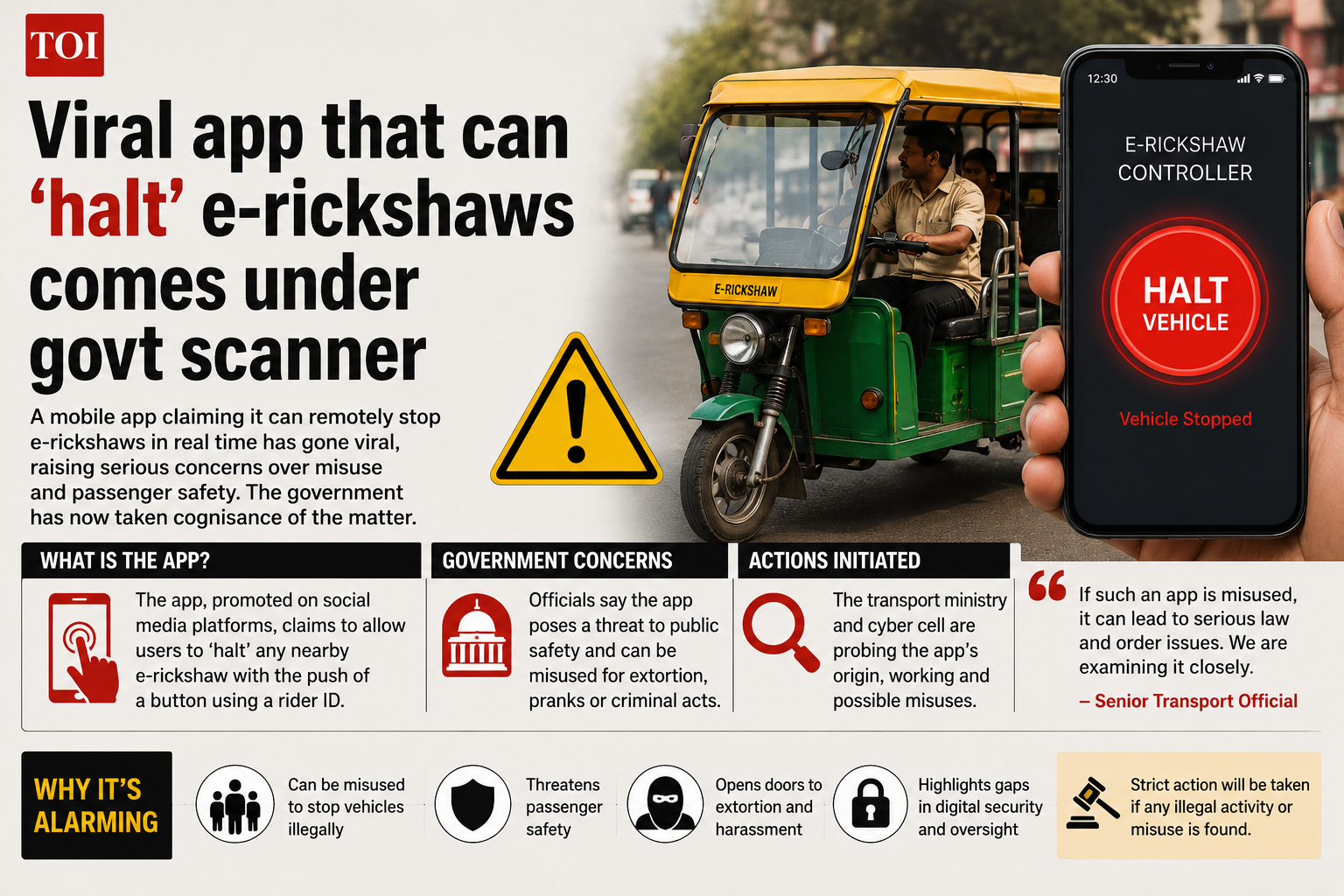
Recently, an app has gained widespread attention on social media and messaging platforms in India for allegedly having the ability to remotely stop e-rickshaws. This claim has caused concern among e-rickshaw drivers, passengers, and the general public alike. The idea of an app that can ‘halt’ a vehicle remotely sounds alarming and raises questions about safety, privacy, and misuse.
How Does the App Claim to Work?
Details about the app’s exact working mechanism remain unclear and unverified. However, the general notion is that the app can connect to an e-rickshaw’s control system or battery management system and disable its operation remotely. Some versions of these claims suggest the app exploits vulnerabilities in the vehicle’s electronic systems or uses Bluetooth or internet connectivity to interfere with the vehicle’s functioning.
It is important to note that e-rickshaws, being electric vehicles, rely on battery-powered motors controlled by electronic circuits. If these circuits have security loopholes or are connected to external devices, theoretically, they might be manipulated. But such scenarios depend heavily on the make, model, and technology used in the e-rickshaw.
Why Has the Government Come Under Scanner?
The government’s attention towards this app stems from concerns about public safety and potential criminal misuse. If an app can arbitrarily stop e-rickshaws, it could cause accidents, disrupt transport services, or be used for harassment. Moreover, the app raises questions about cybersecurity standards in electric vehicles and the need for regulation.
Authorities are reportedly investigating whether the app violates any laws related to telecommunications, cybercrime, or vehicle safety. They are also looking into how the app gained access to e-rickshaw systems and whether manufacturers need to improve security measures.
What Should E-Rickshaw Drivers and Users Know?
- Stay Alert: Be cautious about apps claiming extraordinary control over vehicles. Verify information before trusting or sharing.
- Check Vehicle Security: If you own or operate an e-rickshaw, inquire about the security features of its electronic systems from manufacturers or dealers.
- Report Suspicious Activity: If you experience unexpected vehicle stoppages or suspect tampering, report it to local authorities immediately.
- Limit App Permissions: Avoid installing unknown apps that request access to your phone’s Bluetooth or internet without clear purpose.
- Follow Official Updates: Keep an eye on government advisories or manufacturer notices about vehicle security and software updates.
What Can the General Public Do?
For passengers and other road users, it is essential to stay informed but avoid panic. Here are some practical steps:
- Verify news and rumors before sharing on social media.
- Support efforts to improve safety and cybersecurity in electric vehicles.
- Encourage drivers to maintain their vehicles properly and report issues promptly.
- Understand that technology can have vulnerabilities, but regulatory oversight aims to address these.
What Are the Broader Implications?
The emergence of such an app highlights the growing intersection between digital technology and public transport in India. Electric vehicles, including e-rickshaws, are increasingly equipped with electronic controls and connectivity features. While these advancements improve efficiency and convenience, they also introduce new risks related to hacking, unauthorized access, and safety.
It underscores the need for robust cybersecurity standards, better awareness among users, and proactive government regulation to protect citizens and transport operators. As India moves towards smarter and greener transport solutions, balancing innovation with security will be crucial.
What Remains Uncertain?
At present, there is no verified evidence publicly available that conclusively proves the app’s ability to stop e-rickshaws remotely or details its technical operation. The viral nature of the app’s claims means misinformation can spread quickly, causing unnecessary alarm or distrust.
Authorities and experts continue to investigate, and users should wait for official updates before drawing conclusions. Meanwhile, it is wise to exercise caution, avoid downloading suspicious apps, and follow safety best practices.
Conclusion
The viral app claiming to halt e-rickshaws has sparked important conversations about vehicle security and digital safety in India’s evolving transport landscape. While the government’s scrutiny is a positive step towards addressing potential risks, users should remain informed and cautious. Understanding the technology, staying vigilant, and supporting regulatory efforts can help ensure that innovations in electric mobility remain safe and reliable for everyone.
"Technology brings great benefits but also new challenges. Awareness and responsible use are key to harnessing its potential safely."