Introduction
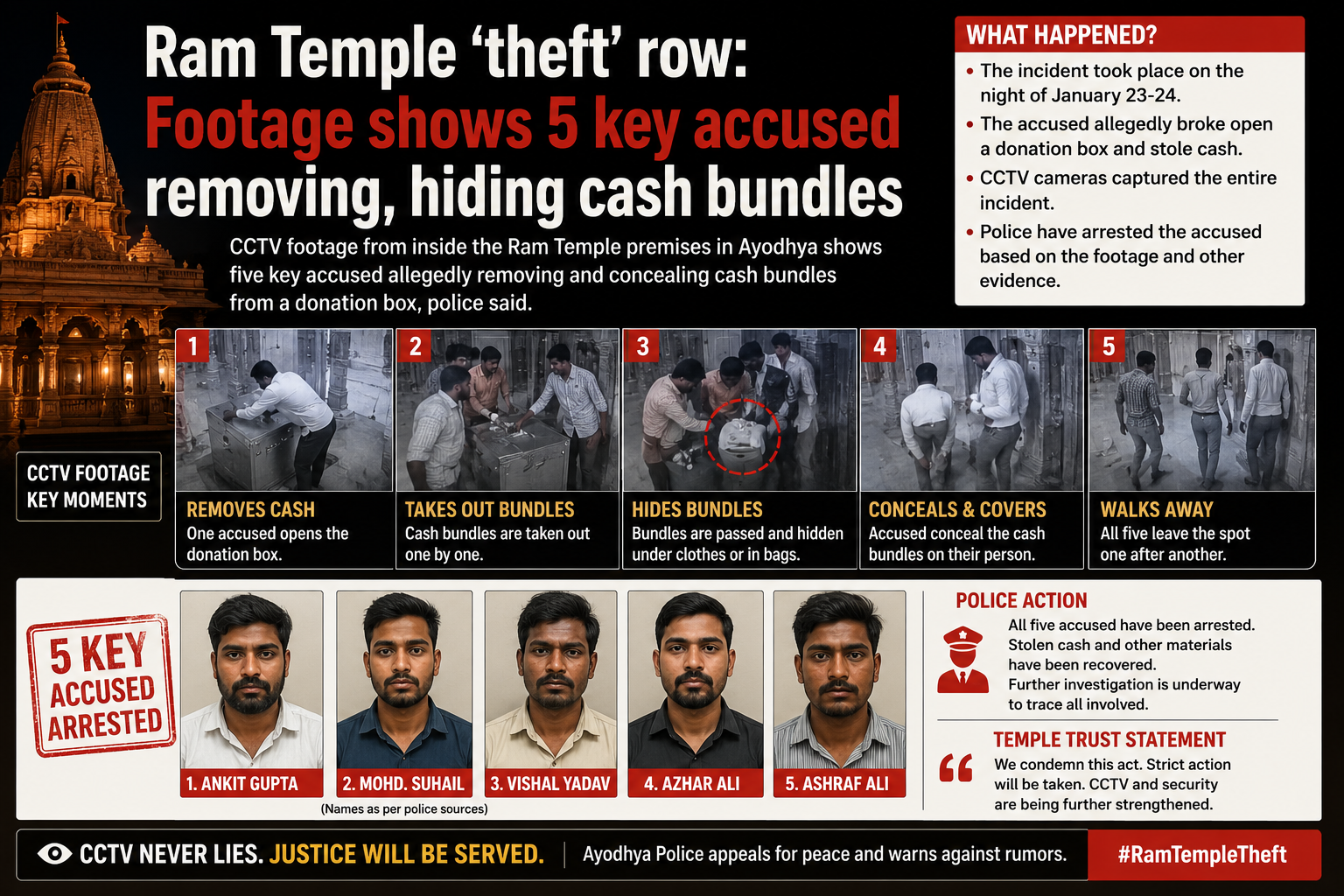
The Ram Temple in Ayodhya is a subject of immense cultural, religious, and political significance in India. Recently, a controversy has emerged involving allegations of theft at the temple’s construction site. Footage has surfaced showing five key accused individuals allegedly removing and hiding bundles of cash. This has sparked widespread public interest and debate.
What Is the Ram Temple ‘Theft’ Row?
In simple terms, the ‘theft’ row refers to accusations that cash was illicitly taken from the Ram Temple construction site. The temple, being a high-profile project, involves large amounts of donations and financial transactions. The controversy arose when some individuals were caught on camera handling bundles of cash, which led to suspicions of misappropriation.
Who Are the Accused?
According to reports, five individuals have been identified as key accused in this case. They were seen on video footage removing and hiding cash bundles. However, it is important to remember that being accused or appearing in footage does not automatically mean guilt. Legal processes and investigations will determine the facts.
What Does the Footage Show?
The video reportedly shows the accused persons handling large amounts of currency notes. The footage has been circulated widely in media and social networks, leading to public outrage and demands for accountability.
Interpreting the Footage
- Visual evidence can be powerful but also misleading if taken out of context.
- The footage does not provide details about the origin or destination of the cash.
- It is unclear whether the actions seen in the video were authorised or illegal.
- Authorities need to investigate the circumstances, including verifying the authenticity of the footage.
Legal and Social Implications
This case has several layers of complexity. Beyond the legal questions, it touches upon public trust, religious sentiments, and the transparency of high-profile projects.
Legal Process
Indian law mandates thorough investigation before any conclusions. The accused have the right to defend themselves, and courts will examine all evidence, including the footage, witness statements, and other material.
Public Perception and Media Role
Media coverage can shape public opinion but may also contribute to misinformation if not handled responsibly. It is essential for readers to consume news critically and avoid jumping to conclusions.
What Can Readers Do?
When encountering such controversies, here are some practical steps readers can take:
- Verify Sources: Check if the news is from credible and reliable sources.
- Understand the Context: Recognise the cultural and social significance of the Ram Temple and why such cases attract attention.
- Wait for Official Updates: Follow updates from law enforcement and judicial authorities rather than relying solely on social media.
- Engage Respectfully: In discussions, respect differing viewpoints and avoid spreading unverified claims.
- Stay Informed: Learn about the legal process and rights of the accused to appreciate how justice is served.
Conclusion
The Ram Temple ‘theft’ row is a developing story that highlights the challenges of managing transparency and accountability in significant public projects. While the footage showing the accused handling cash bundles has raised questions, it is crucial to reserve judgment until investigations conclude.
As readers and citizens, staying informed, critical, and patient is the best approach while respecting the legal process and diverse sentiments involved.
“Justice delayed is justice denied” – but so is justice denied when rushed without facts.