India’s QS Leap: A Sign of Educational Progress
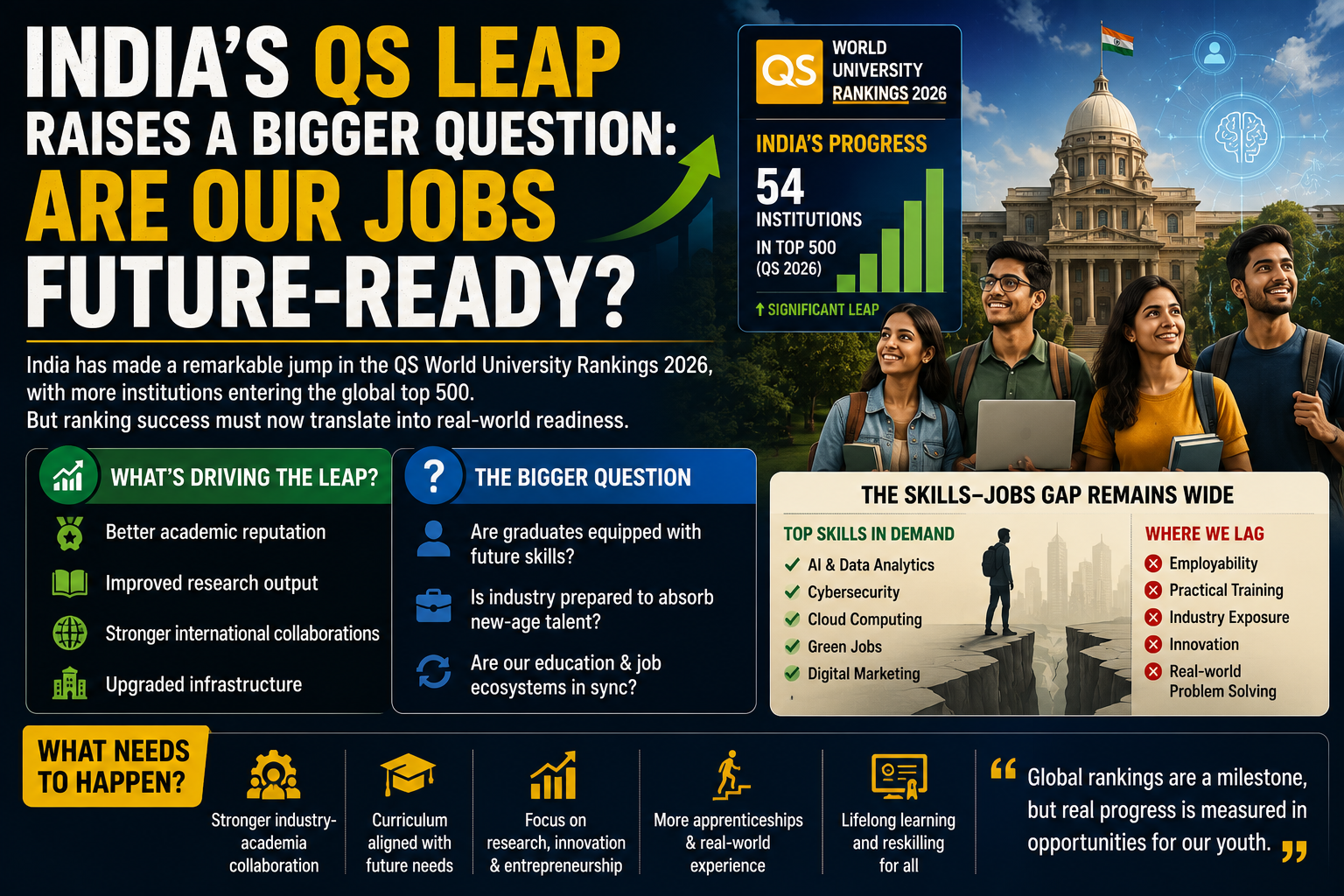
Recently, India made headlines by climbing several places in the QS World University Rankings. This leap is a positive sign, indicating that Indian universities are improving in terms of research, teaching, and international outlook. For students and parents, it offers hope that Indian higher education is gaining global recognition.
But What Does This Mean for Jobs?
While better university rankings are encouraging, they raise a bigger question: Are Indian jobs and workers ready for the future? The world of work is changing rapidly due to technology, automation, and new business models. Having a degree from a higher-ranked university is valuable, but it is no longer enough on its own to guarantee career success.
The Changing Nature of Jobs
Many traditional jobs are evolving or disappearing as machines and software take over routine tasks. At the same time, new roles are emerging in areas like data science, artificial intelligence, green energy, and digital marketing. These jobs often require skills that may not be taught in conventional university courses.
What Does Future-Ready Mean?
Being future-ready means having the skills, mindset, and flexibility to adapt to changing job requirements. It includes:
- Technical skills: Knowledge of digital tools, coding, data analysis, and emerging technologies.
- Soft skills: Communication, problem-solving, creativity, and emotional intelligence.
- Lifelong learning: Willingness to continuously upgrade skills through courses, workshops, and self-study.
- Adaptability: Ability to shift roles, industries, or work methods as needed.
Are Indian Jobs Keeping Up?
India’s workforce is large and diverse, ranging from highly skilled professionals to informal sector workers. While some sectors like IT and startups are quick to adopt new technologies and skill sets, others lag behind. Many workers still face challenges such as outdated skills, limited access to training, and job insecurity.
Challenges to Future-Readiness
- Skill gaps: Many graduates find their skills do not match industry needs.
- Access to training: Not all workers can afford or access quality upskilling programs.
- Job market uncertainty: Automation and economic changes create unpredictability.
- Informal sector: A large portion of India’s workforce is in informal jobs with limited opportunities for skill development.
What Can Workers Do?
If you are a student, professional, or job seeker, here are some practical steps to prepare for the future:
- Stay informed: Keep track of industry trends and emerging skills in your field.
- Learn continuously: Take online courses, attend workshops, or pursue certifications in relevant areas.
- Develop soft skills: Work on communication, teamwork, and problem-solving abilities.
- Be adaptable: Be open to changing roles, industries, or learning new technologies.
- Network: Connect with professionals and mentors who can guide your career development.
Role of Employers and Policymakers
Creating a future-ready workforce is not only an individual responsibility. Employers and policymakers must also play their part by:
- Investing in training: Companies should provide continuous learning opportunities for employees.
- Updating curricula: Educational institutions need to align courses with industry demands.
- Supporting informal workers: Policies to include informal sector workers in skill development programs.
- Encouraging innovation: Promoting startups and new industries that create future jobs.
Uncertainties Ahead
While efforts are underway, the pace of change means no one can predict exactly which jobs will thrive in the next decade. Automation may eliminate some roles but also create new opportunities. Economic shifts, global trends, and technology breakthroughs will all influence the job market.
Therefore, preparing for the future means embracing uncertainty and focusing on transferable skills and lifelong learning.
Conclusion: India's Leap Is Just the Beginning
India’s improved QS rankings show promise in education, but the true test is whether this translates into a workforce ready for the future. Individuals must proactively build relevant skills, while institutions and policymakers work together to bridge gaps and create an environment where jobs evolve with changing times.
By focusing on adaptability, continuous learning, and inclusive policies, India can ensure that its workforce not only climbs rankings but also thrives in the new world of work.