Introduction
India is witnessing a rapid shift towards electric vehicles (EVs) as part of its commitment to reducing pollution and greenhouse gas emissions. Electric mobility offers a promising path to cleaner transport, but it also presents new challenges for the country’s power system. Aligning the growth of EVs with power system planning is essential to ensure that this transition is sustainable, affordable, and reliable.
Why Align Electric Mobility with Power System Planning?
The power system, which includes generation, transmission, and distribution of electricity, must be able to meet the increased demand from EV charging. Without proper planning, a sudden rise in electricity consumption from EVs could strain the grid, leading to reliability issues or higher costs.
Moreover, electric mobility offers opportunities to support the grid if managed well. For instance, EV batteries can act as distributed storage, helping balance supply and demand. This makes coordination between EV adoption and power system planning not just necessary but beneficial.
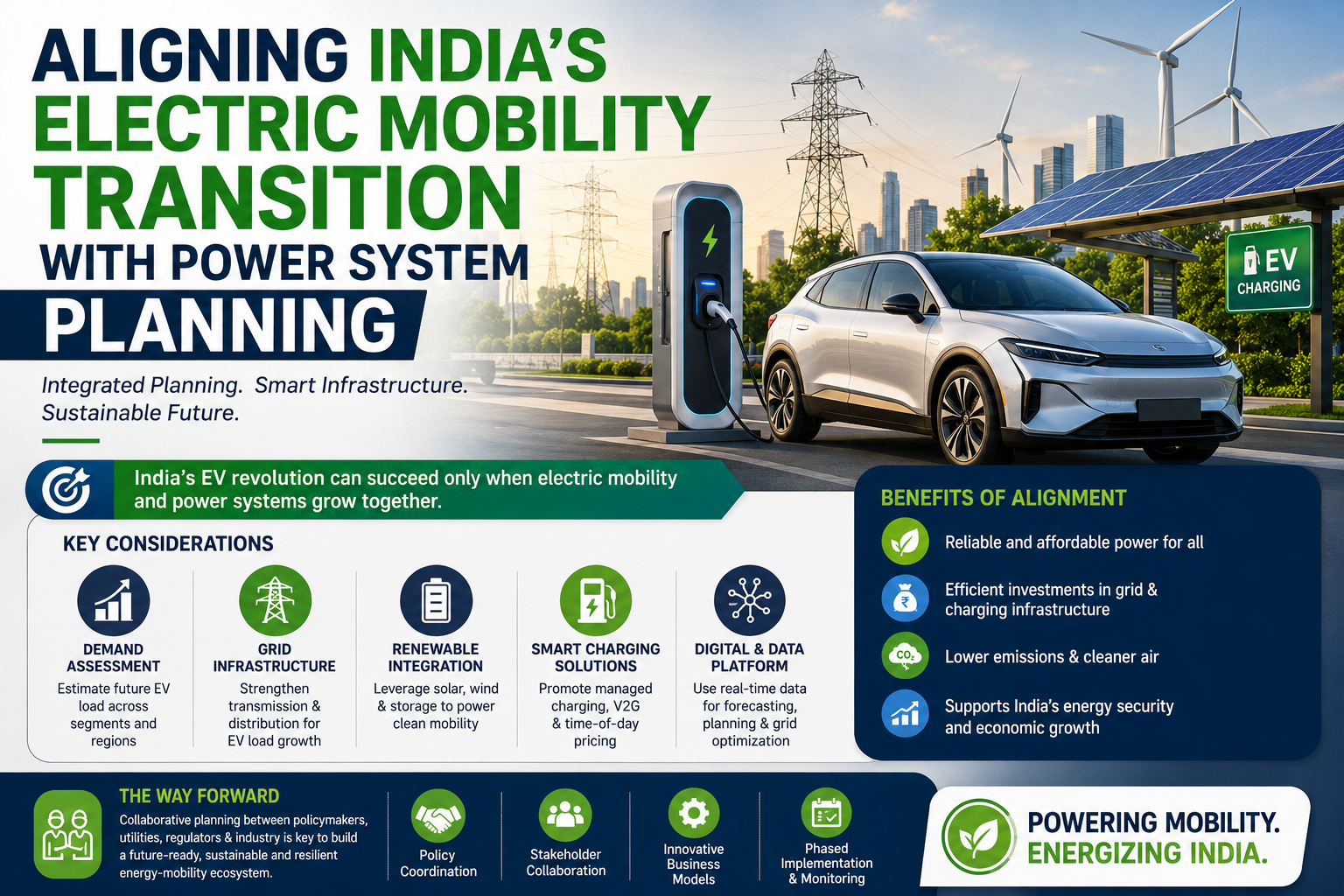
Key Considerations in Power System Planning for EVs
1. Forecasting Demand Growth
Power planners need to estimate how many EVs will be on the road and how much electricity they will consume. This involves understanding:
- Types of EVs (two-wheelers, three-wheelers, cars, buses)
- Charging patterns (home, workplace, public stations)
- Charging speeds and technologies
These factors influence when and how much power is drawn from the grid.
2. Infrastructure Upgrades
Many parts of India’s power distribution network require upgrades to handle new loads from EV charging. This includes:
- Strengthening local transformers and feeders
- Installing smart meters and communication systems
- Expanding charging infrastructure with grid connectivity in mind
3. Smart Charging and Demand Management
Uncontrolled charging, especially during peak hours, can cause grid stress. Smart charging technologies allow EVs to charge during off-peak times or when renewable energy supply is high. Demand response programs can incentivize consumers to shift their charging habits, benefiting both the grid and the consumer.
4. Integrating Renewable Energy
India is aggressively expanding renewable energy capacity, particularly solar and wind. Aligning EV charging with renewable availability can reduce carbon footprint and improve grid stability. For example, daytime solar generation can be used to charge EVs, while EV batteries can store excess renewable energy for later use.
What Can Consumers and Stakeholders Do?
While much of the planning happens at the policy and utility level, consumers and other stakeholders play a vital role:
- Adopt Off-Peak Charging: Charging EVs during non-peak hours helps reduce grid stress and can lower electricity bills.
- Support Smart Charging: Using chargers that can communicate with the grid enables better demand management.
- Stay Informed: Keep updated about local grid conditions, incentives, and new technologies.
- Engage with Policymakers: Feedback from EV users can guide better infrastructure and policy decisions.
Challenges and Uncertainties
Several uncertainties remain in aligning electric mobility with power system planning:
- Demand Variability: The pace of EV adoption and charging behaviour can vary widely, making forecasting difficult.
- Technology Evolution: Advances in battery technology, charging speeds, and vehicle-to-grid (V2G) capabilities could change power system needs.
- Policy and Regulatory Changes: Evolving policies on tariffs, subsidies, and grid management will impact planning.
Being adaptable and continuously updating plans and infrastructure will be key to managing these uncertainties.
Conclusion
India’s electric mobility transition holds great promise for cleaner, more sustainable transport. However, realising this potential requires thoughtful alignment with power system planning. By forecasting demand accurately, upgrading infrastructure, promoting smart charging, and integrating renewables, India can build a resilient and efficient power system that supports the EV revolution.
Consumers, policymakers, utilities, and manufacturers must collaborate closely to navigate challenges and seize opportunities. In doing so, India can ensure its electric mobility journey is not only green but also reliable and economically viable for all.